
- Nature / Scenery
- History / Culture
- Gourmet
- Traditions / Performing Arts
- Experiences
- Other
The Heart of Hyogo: Experiencing Himeji Beyond the Castle
Contributor : Kyle Metcalf
Nationality : United States of America
The road stretched out ahead, winding through wide open countryside under a clear Hyogo sky.
Forests gave way to quiet towns and open fields, each scene unfolding like a painting.
But we weren't heading straight into the city yet, before reaching Himeji, one stop waited for us, a place that would end up being the highlight of the entire trip.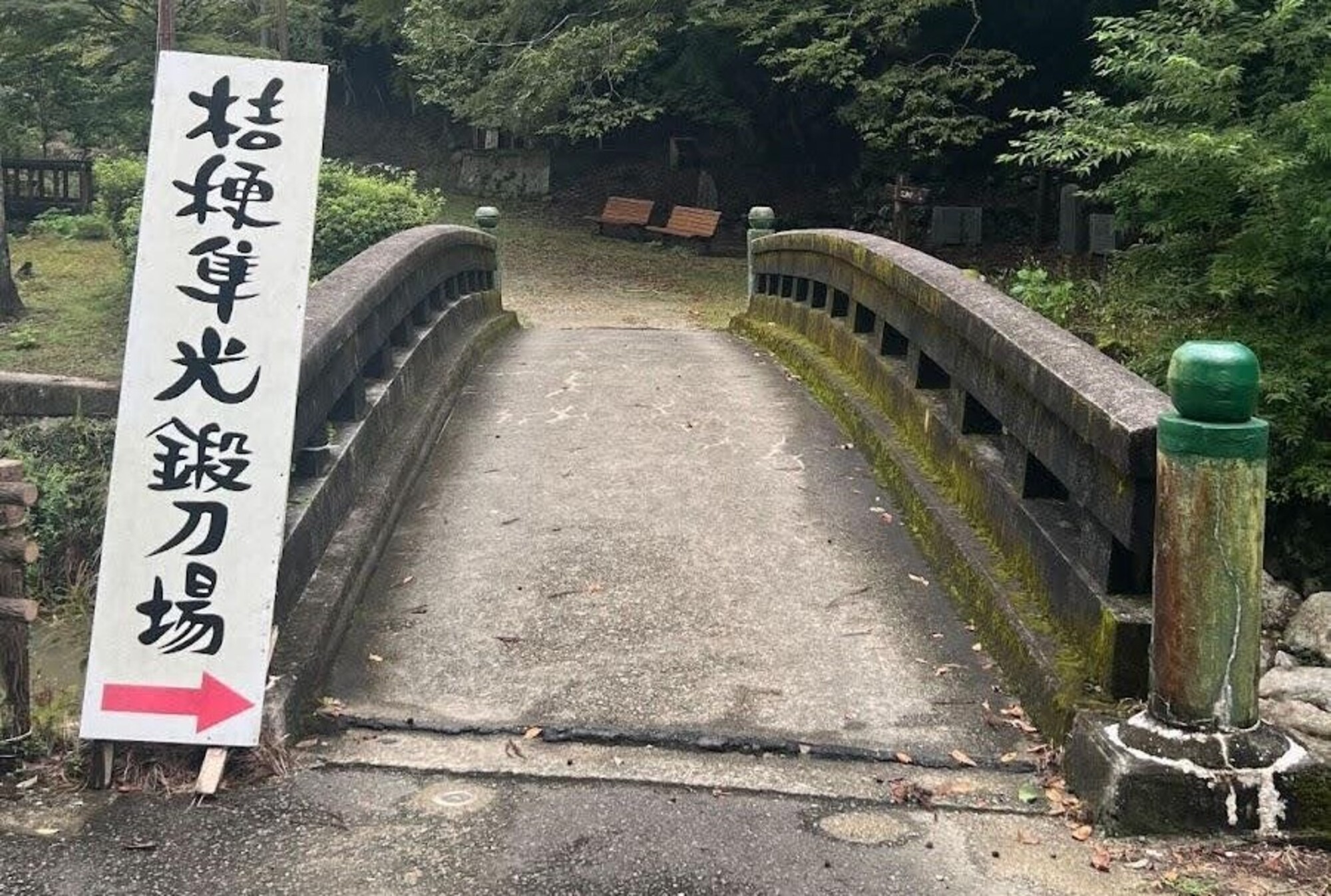
Our destination was a small village known for its traditional katanakaji, Japanese swordsmithing,
home of the house of artisans who had been keeping their craft alive since its very first generation.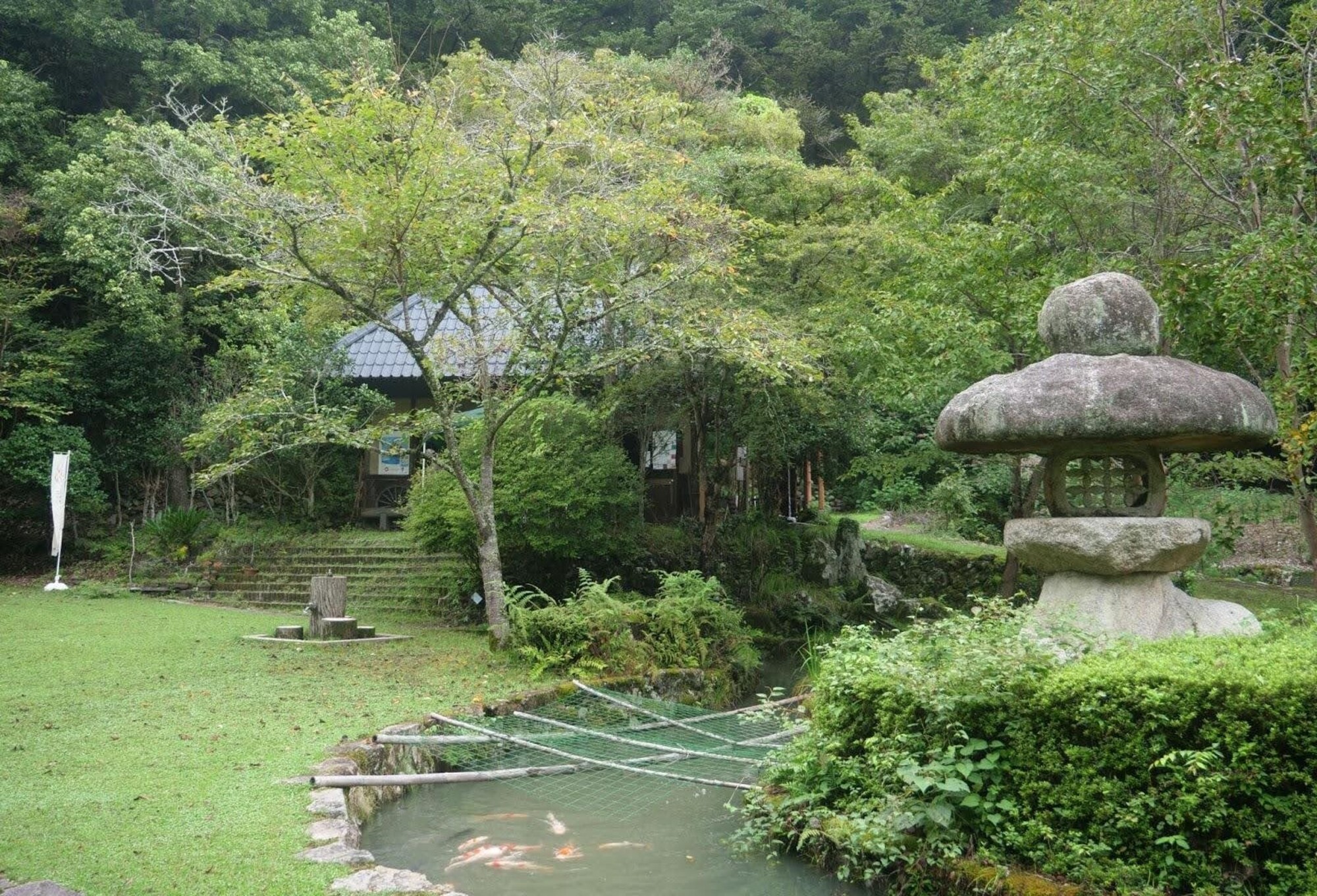
Forged in Fire: The Blacksmith Experience
We came to a workshop called Kikyo Hayamitsu (a traditional Japanese sword workshop), which stood quietly at the edge of the village,
surrounded by mountains and still koi fish ponds. I could hear the steady rhythm of a hammer striking steel, echoing out like a heartbeat.
The blacksmith, a craftsman with more than twenty-five years of experience, greeted us warmly before jumping straight into the demonstration.
There was no long explanation or ceremony. He wanted me to experience it firsthand. He showed me how to choose the metal, select the right hammer, and understand how the temperature of the forge affects the steel.
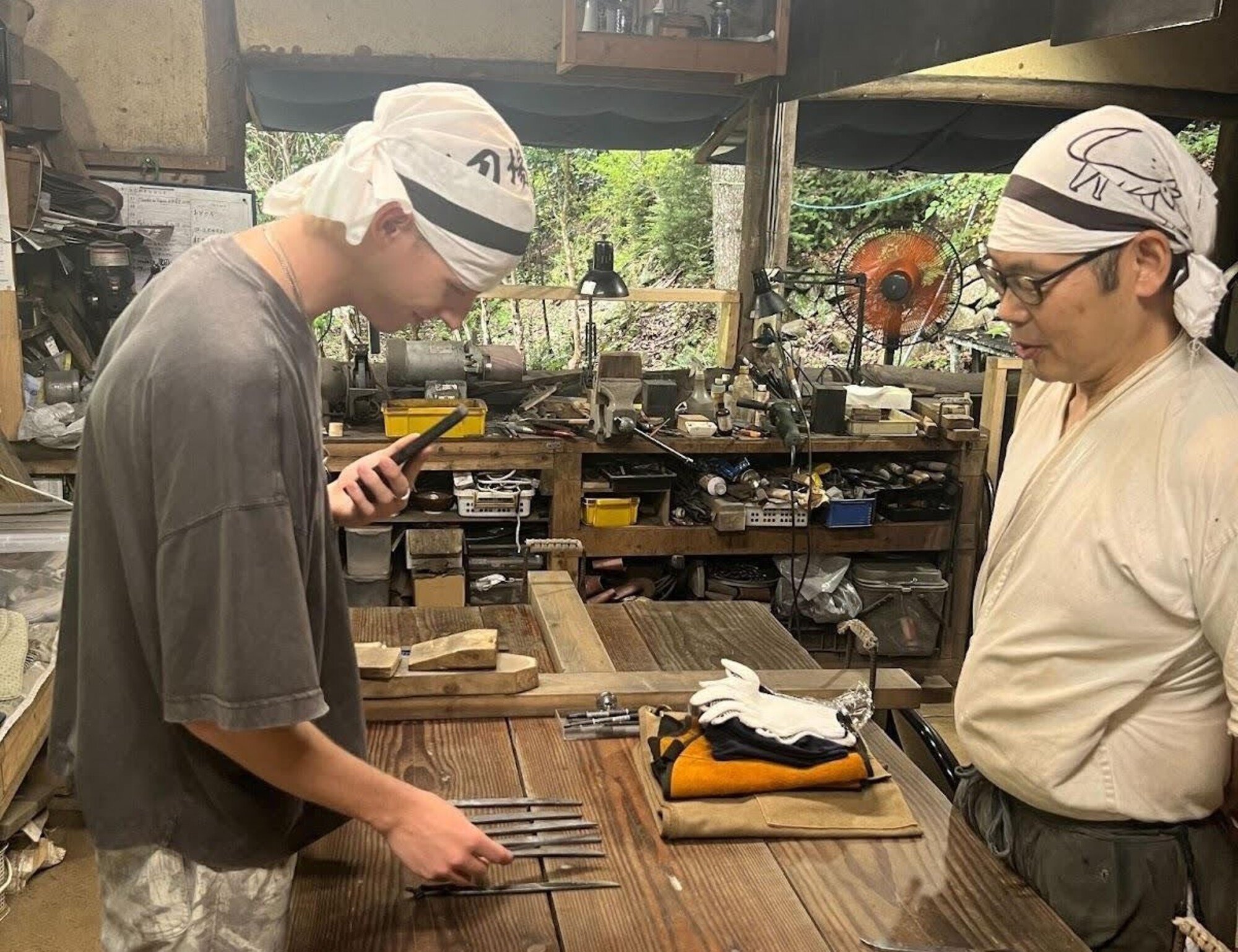
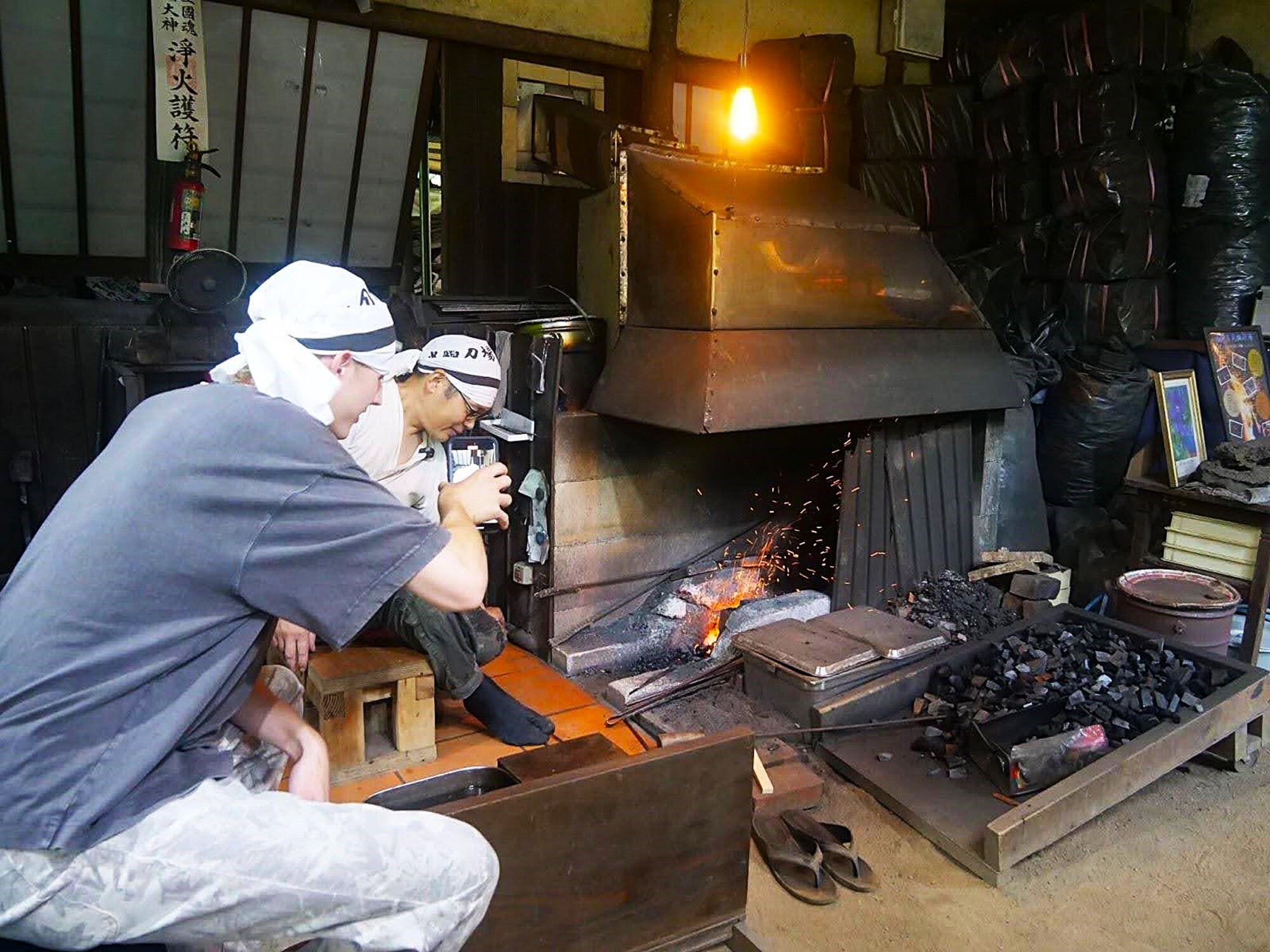
I could have watched him for hours. He would raise the hammer with an instinctual kind of calculation,
then sparks would burst from the anvil with each strike, lighting up the dim room for a brief moment before fading back into darkness.
He said that the room had to be dark, because even the glow of the metal played a part in informing the next strike.
He explained the process behind creating a katana, the layers of folded steel, the constant balance between heat and patience,
and the centuries of tradition that define this craft. It was more than metalwork. It was art built through discipline and respect.
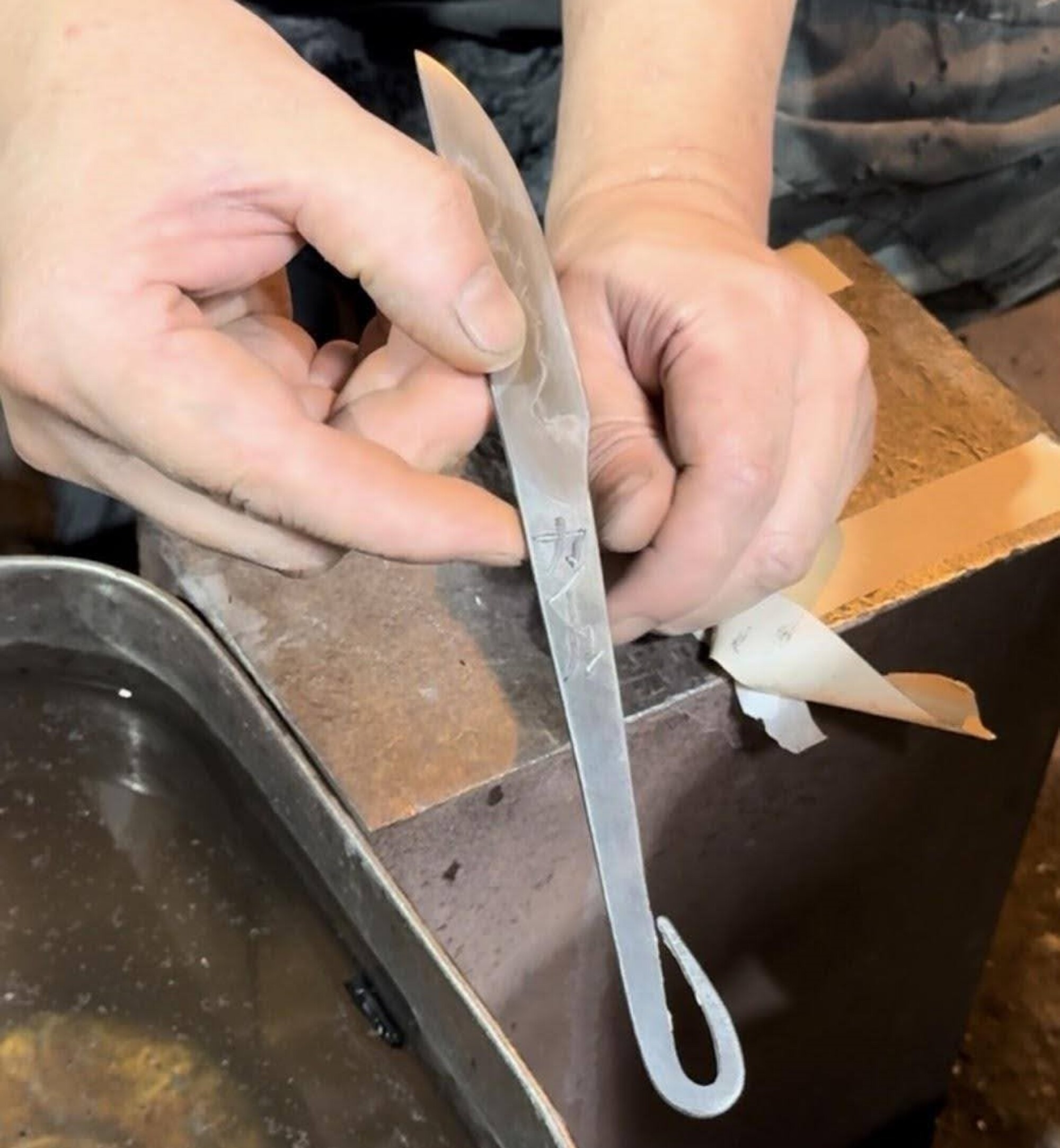
Then he handed me the hammer. I began forging my own small katana knife under his careful guidance. The moment the hammer met the heated steel,
I could feel the weight of the process.
The heat pressed against my face, the vibration ran through my arms, and the sound filled the entire space.
It was raw, intense, and deeply satisfying.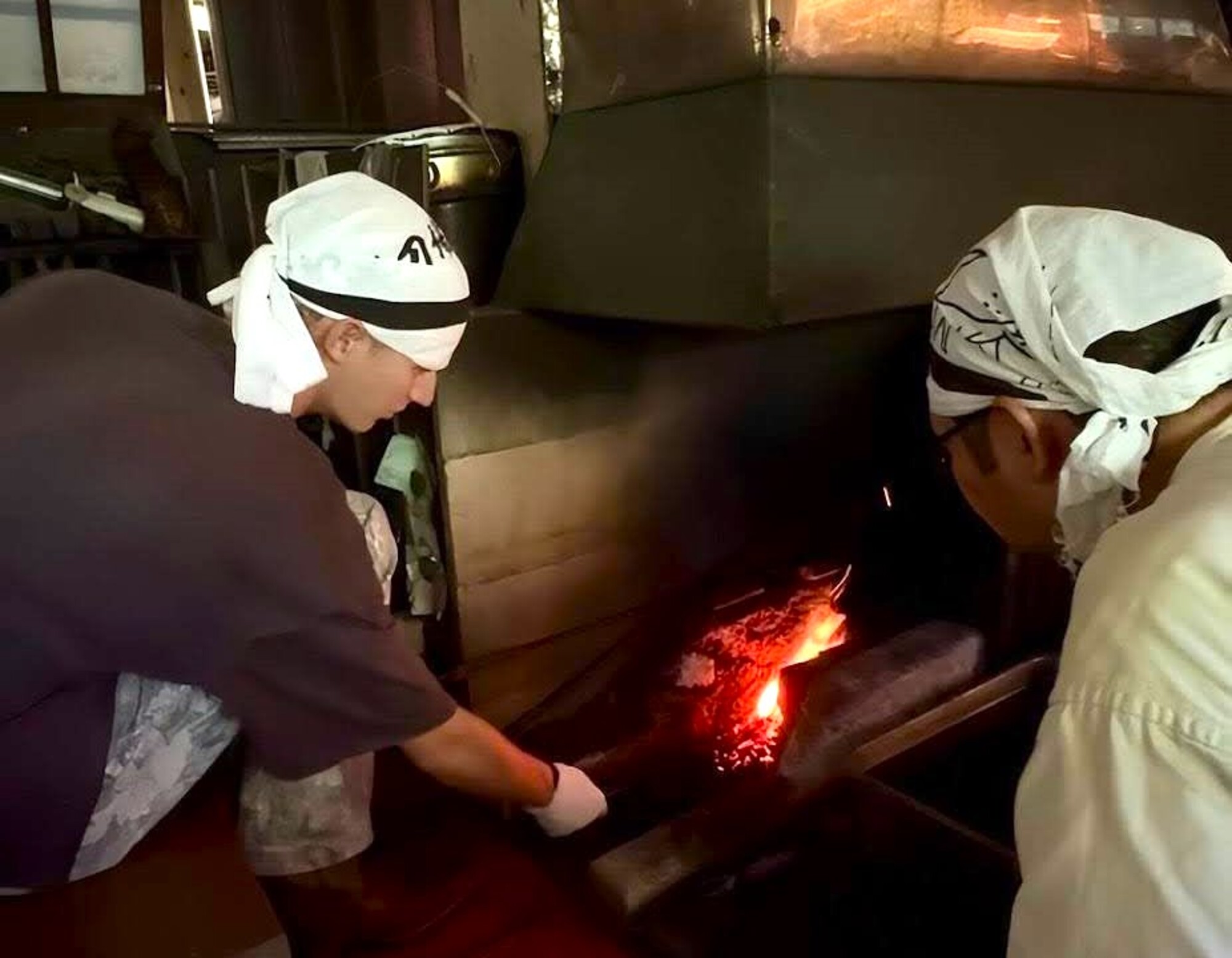
Step by step, from shaping to polishing, I learned the rhythm of the craft. It felt like learning a language without words.
I filmed the experience, spoke with the locals, and later shared the full story across my social channels — Instagram,
YouTube, and TikTok, all under @Im_Kyle_Metcalf.
When the forging was finished, the blacksmith invited us for a quiet walk through the nearby mountains.
We followed a narrow path lined with tall trees until we reached a small shrine.
The air was cool and filled with the scent of pine. It felt like time had slowed down completely.
No words, no noise, just the sound of the wind and the weight of tradition all around us.
You can watch that full scene in my YouTube video, but being there in person was different.
Seeing that balance of strength and peace in a man who has spent decades perfecting his craft changed how I looked at Japanese culture.
It reminded me that mastery doesn’t rush. It’s earned, one strike at a time.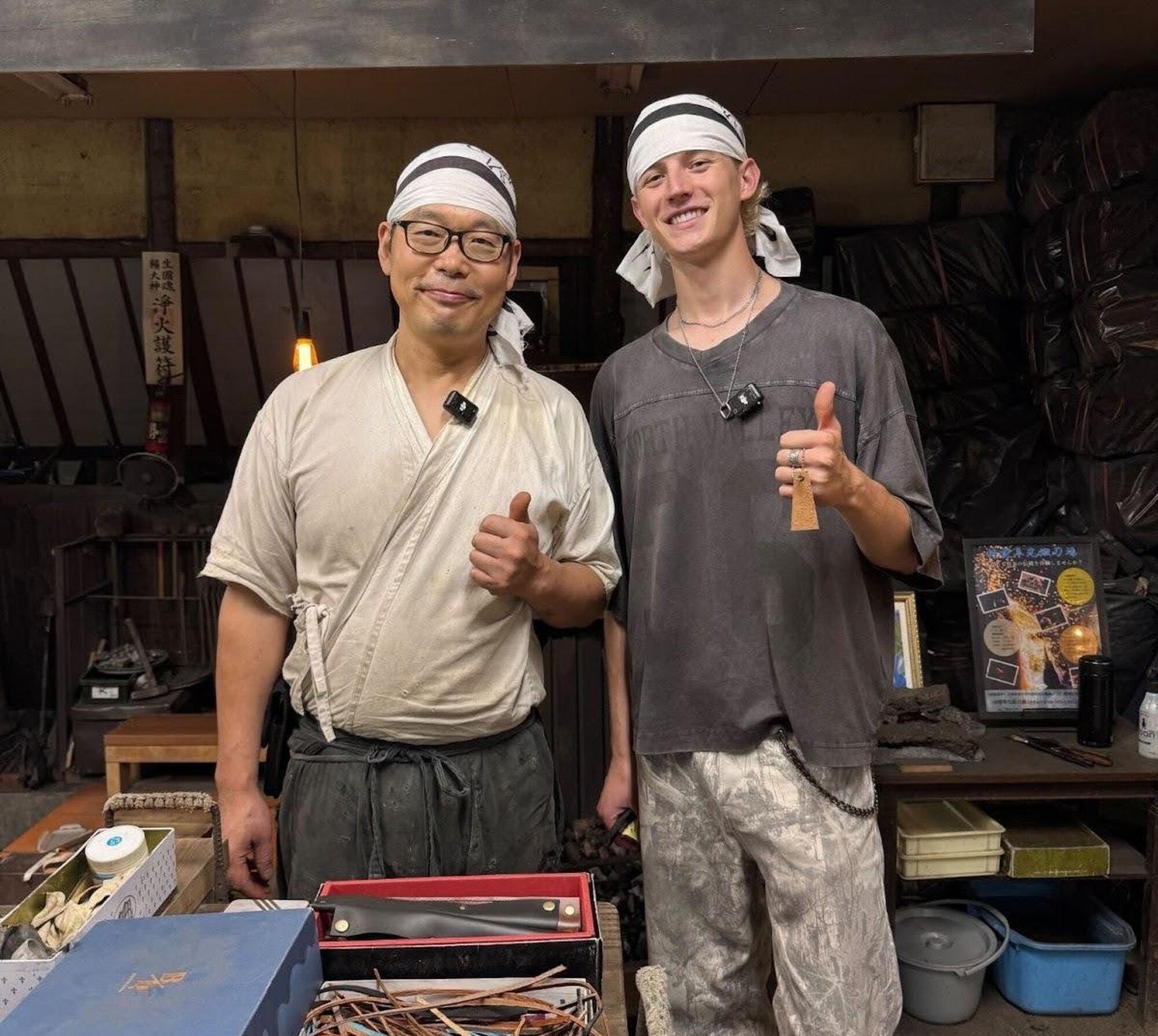
Arrival in Himeji
After leaving the blacksmith’s village, the drive toward Himeji felt like entering a new world.
The road flattened, and the mountains gave way to open streets and city life. The first sight of Himeji Castle appeared in the distance like something out of a painting.
Pure white, massive, and perfectly structured against the wide sky.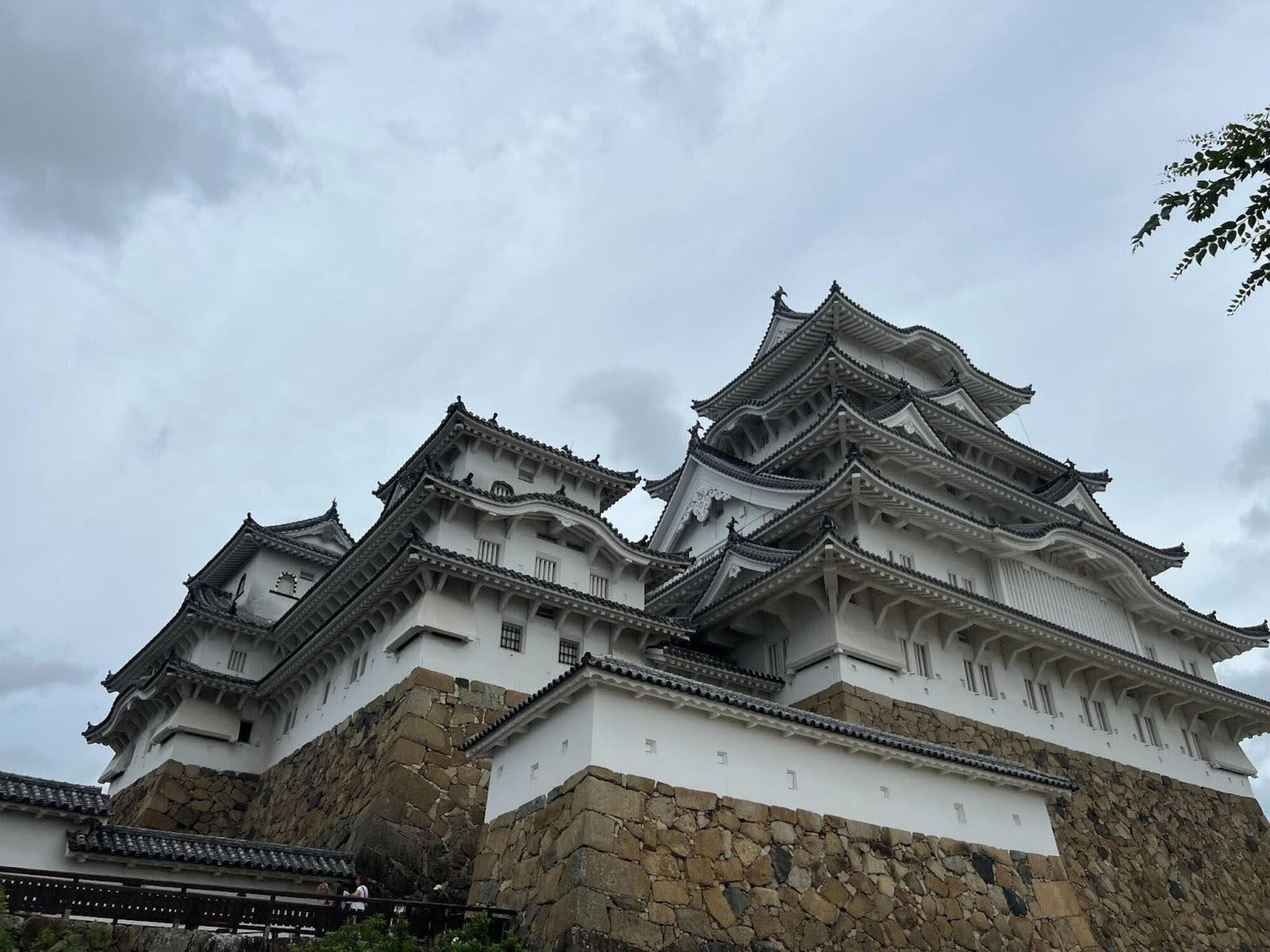
Himeji Castle, also known as Shirasagi-jō, or “White Heron Castle,” is over 400 years old and is considered one of Japan’s most beautiful surviving castles.
Standing at its base, the architecture immediately commands respect.
The walls seem to glow under the sunlight, and the layers of roofs rise elegantly like wings in motion.
Climbing through the castle’s wooden corridors, the floors creaked under each step.
Every detail, from the heavy doors to the narrow stairways, carried traces of history.
It was easy to imagine samurai walking the same halls centuries ago.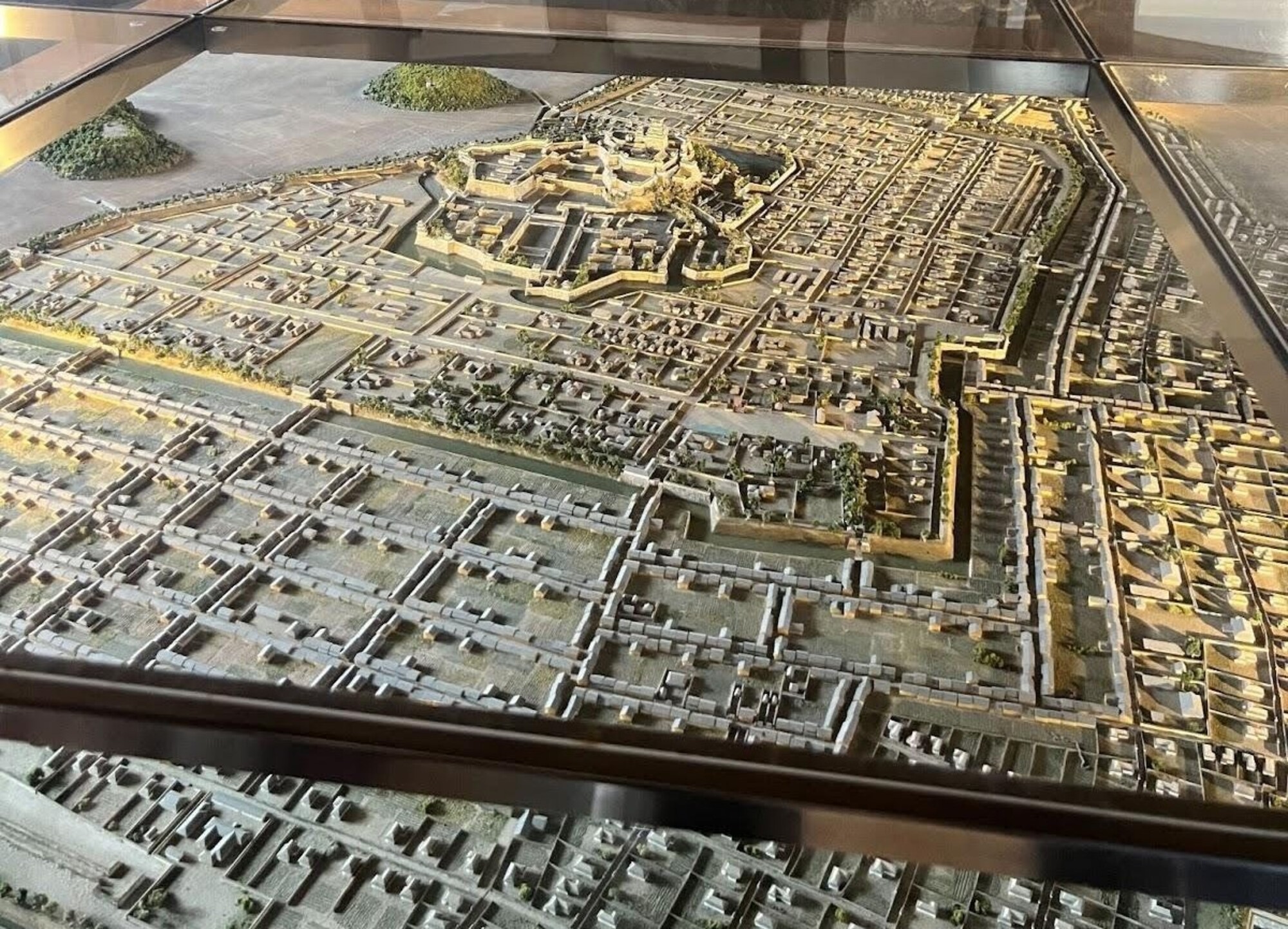
From the top, the view stretched endlessly across Hyogo.
You could see the line between the modern city and the quiet countryside where the old traditions still live.
That contrast is what makes Himeji special. It holds both the past and the present in perfect balance.
Night in the City
When the sun went down, Himeji came alive in a completely different way. Lanterns lit up the narrow streets, and the smell of grilled food drifted through the air.
I ended the day at Yakitori Kimura, a small local izakaya tucked between old buildings, surrounded by warmth and the sound of clinking glasses.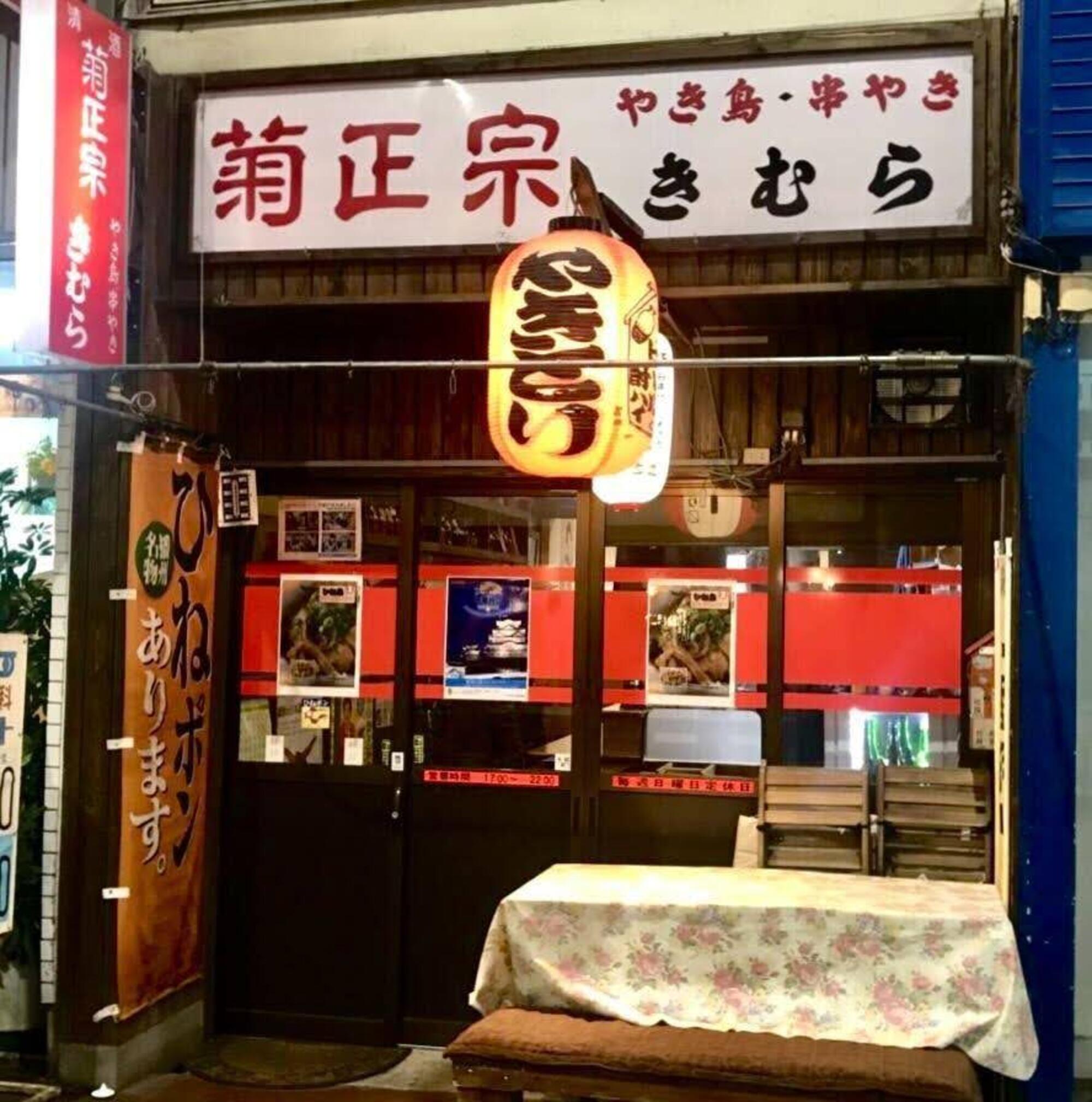
The staff recommended local sake, smooth, slightly sweet and a few dishes fresh off the grill.
The highlight was their specialty, Hinepon: chewy pieces of grilled chicken topped with crisp green onions and a light ponzu sauce that gave every bite a sharp, citrusy kick..
It was simple but addictive, the kind of flavor that makes you stop talking for a second just to appreciate it.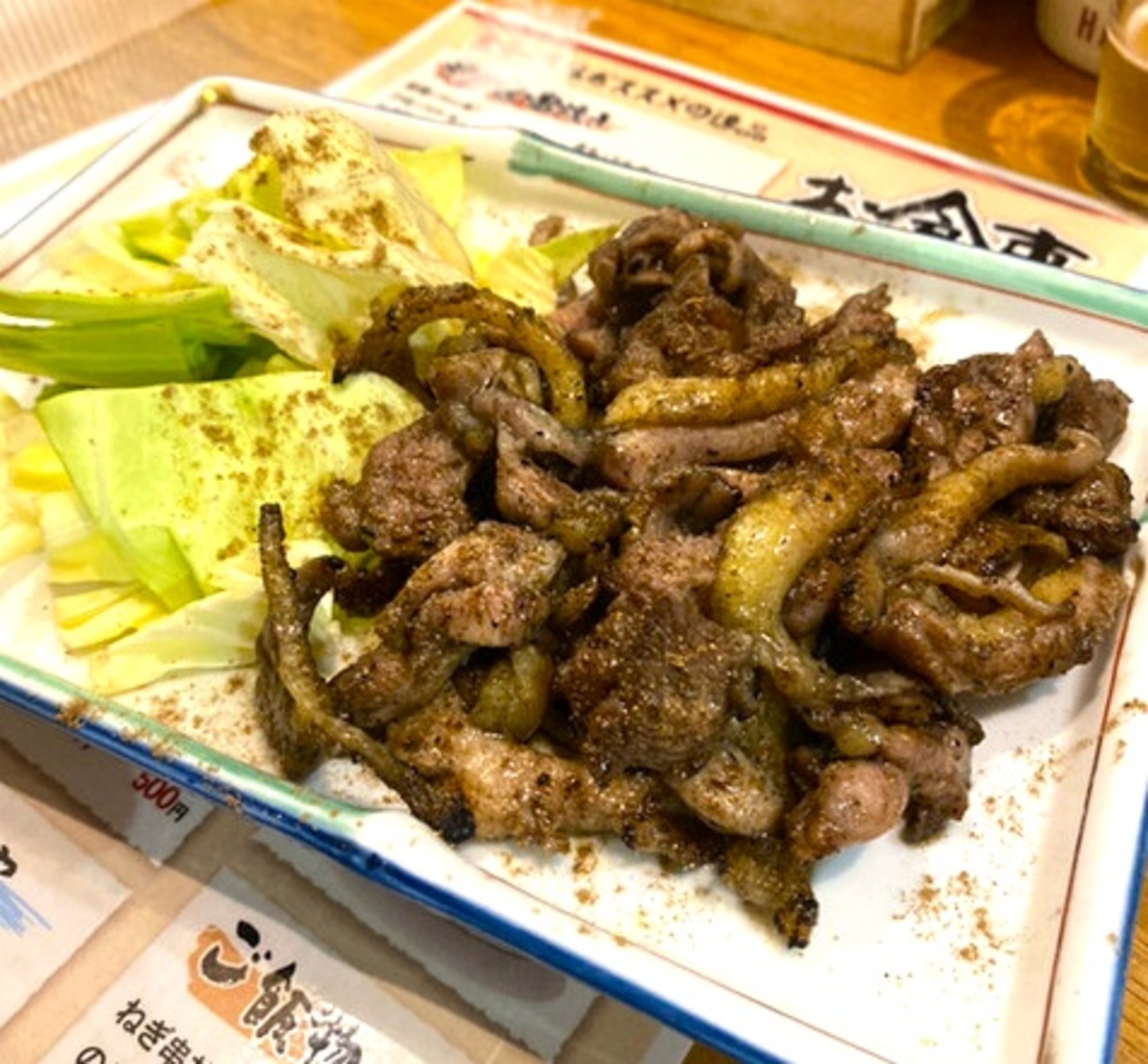

The conversations around me were loud but friendly. People talked about work, life, and little things that only mattered in the moment.
After a day filled with steel, fire, and history, this mix of calm and chaos felt like the perfect ending. It’s exactly what gives Hyogo its soul.
The Japan Toy Museum Before We Left
Before leaving Himeji, we stopped by the Japan Toy Museum, located just outside the city.
Entering inside it felt like stepping into the past; a world of color, history, and memories.
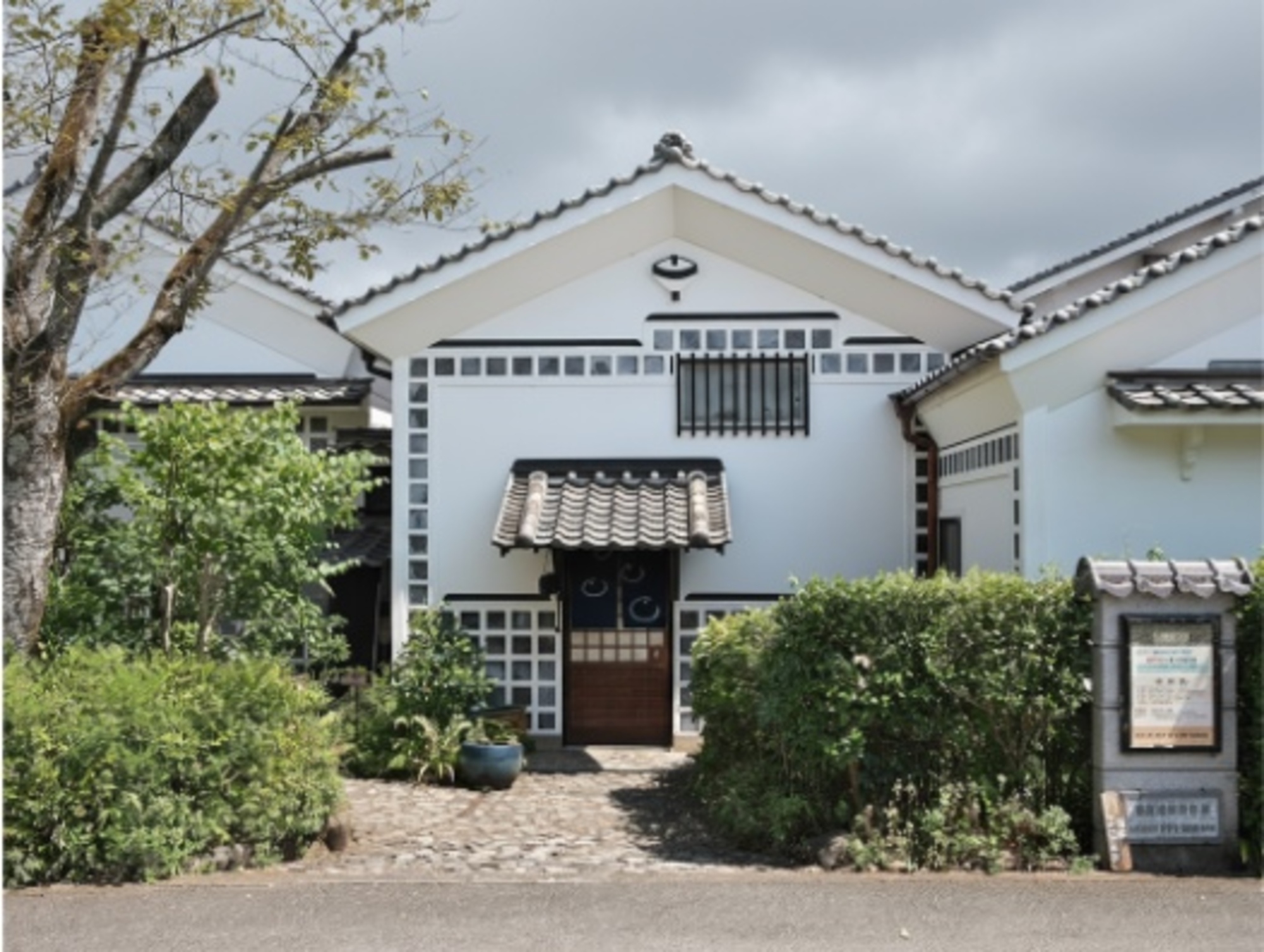
We were personally given a tour by the owner of the museum, who shared stories about how he started collecting toys decades ago.
His passion and energy was infectious. Every display had a story behind it, where it came from, or what part of childhood it represented, and why it was created.
He spoke about how toys aren’t just for play but are cultural artifacts that show how people lived, dreamed, and connected over time.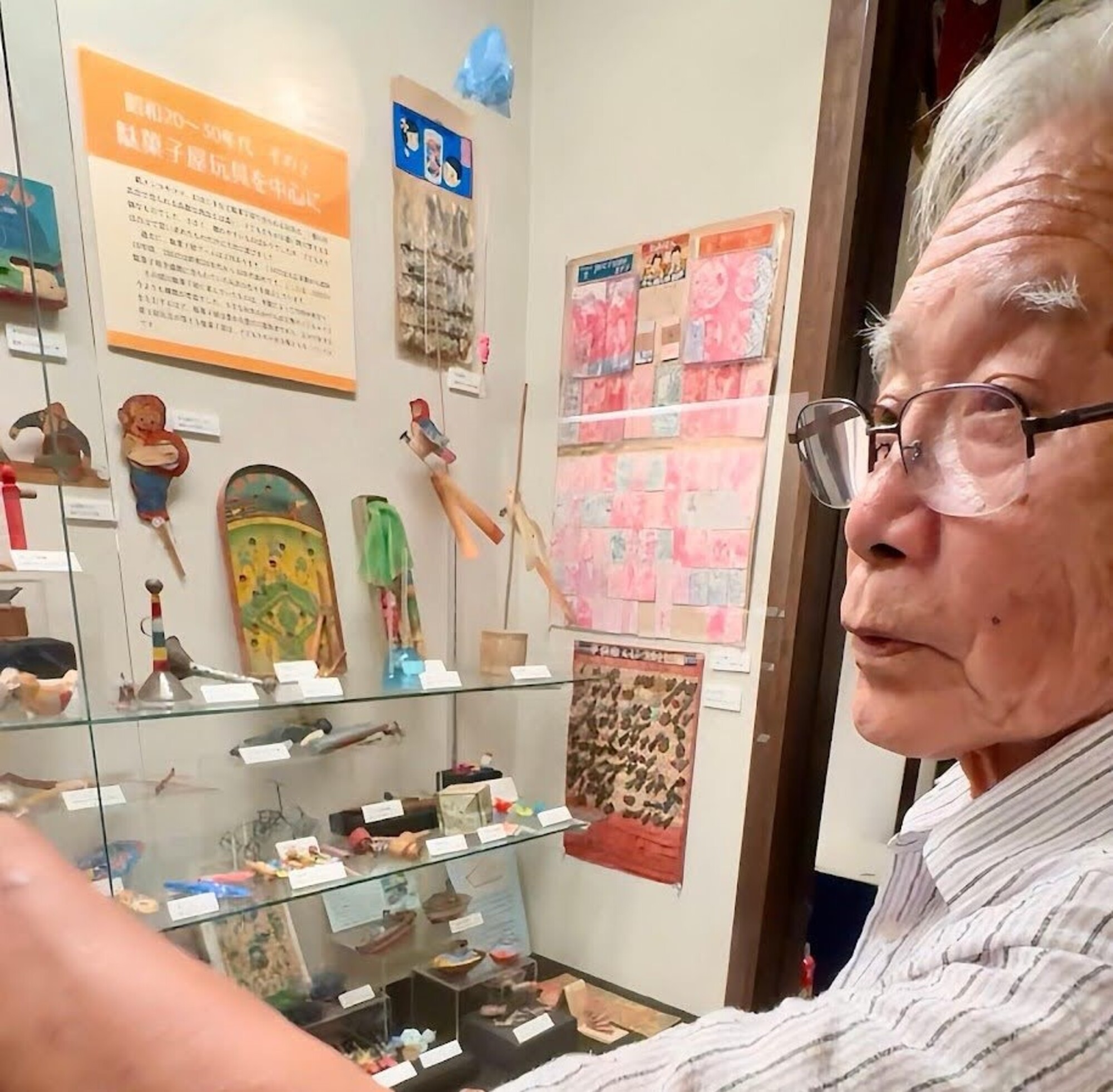

The rooms were filled with wooden crafts, handmade dolls, and nostalgic pieces that carried a sense of warmth and care. Each item reflected a part of Japan’s creativity and craftsmanship,
showing that the same dedication used in sword making or architecture also lives in the simplest forms of art.
When we stepped outside, the afternoon light hit the white walls of the museum, and it all came together.
The visit wasn’t just about nostalgia, it was about seeing how passion, patience, and storytelling exist in every form of creation, no matter the scale.
Reflections on Craft and Culture
Hyogo is a place where tradition still breathes. From the mountain villages of Yumura to the steel workshops hidden in the countryside, every corner holds a story about dedication and heart.
The blacksmith taught me that mastery isn’t about perfection. It’s about showing up every day and doing the work.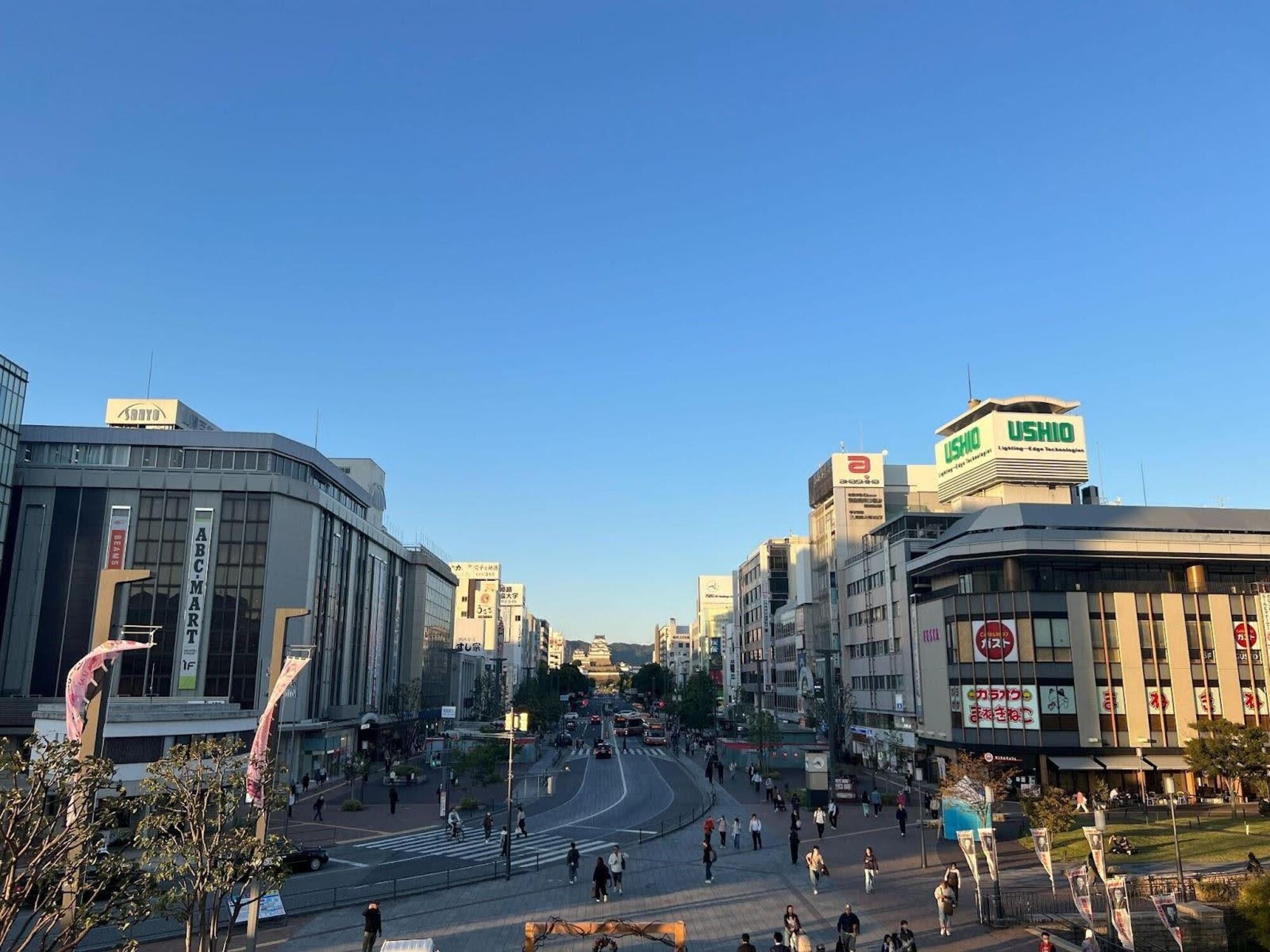
Himeji, with its castle and city life, shows the other side of that same idea. Strength and elegance exist side by side.
As I walked back to my hotel that night, I thought about how the entire trip felt connected.
The onsen steam, the sound of the hammer, the castle walls glowing under the moonlight. Different worlds, same spirit.
That is the heart of Hyogo. A place where history, craftsmanship, and human warmth come together naturally. Absolutely peak.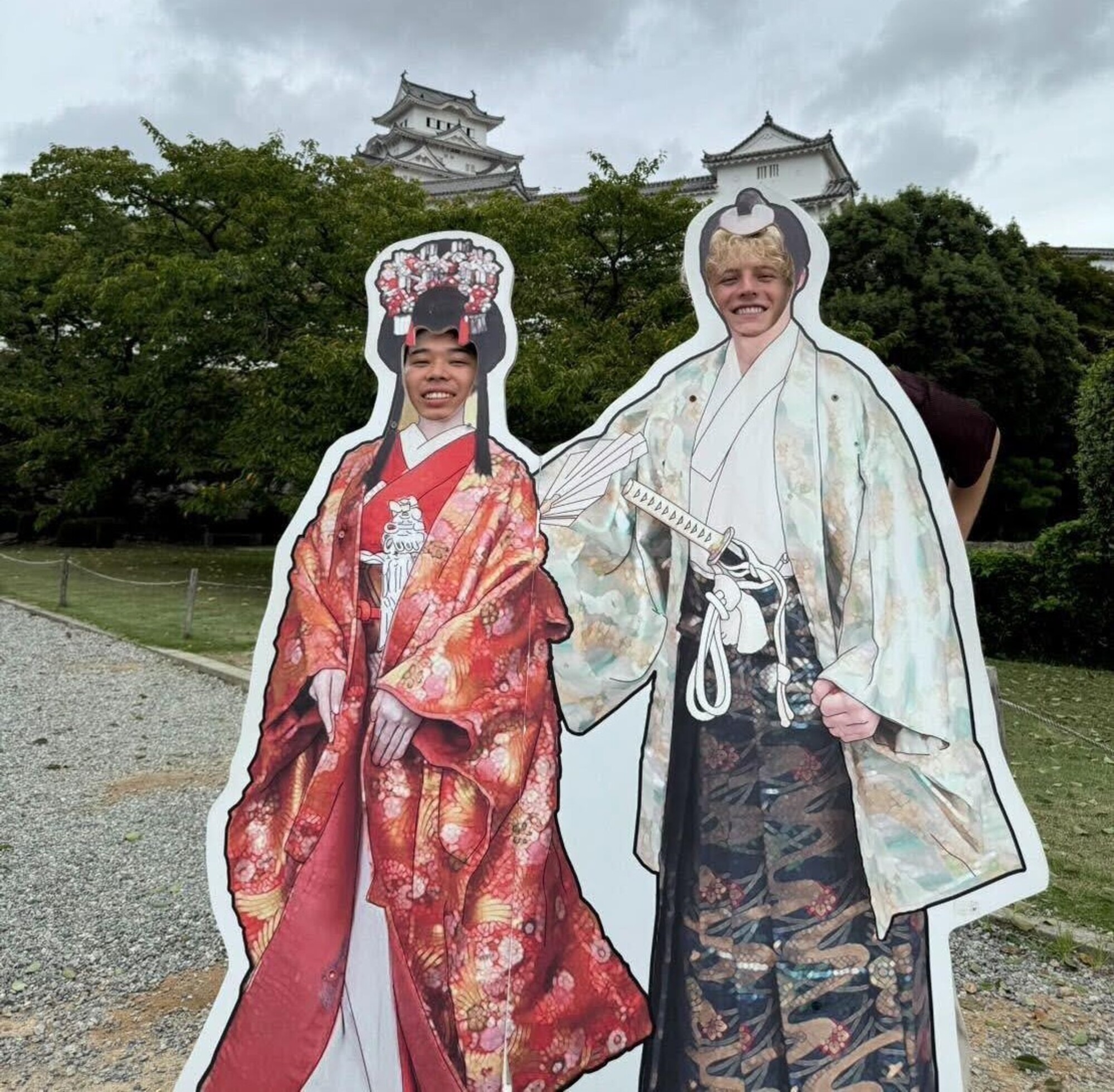




 For Travel Agents